
Principal Investigators in the Center for Inverse Design
This page provides brief descriptions of the principal investigators within the Center for Inverse Design. More complete biographical summaries are also available. Principal investigators are organized within their research institutions—the National Renewable Energy Laboratory (NREL), Colorado School of Mines (CSM), Oregon State University (OSU), Northwestern University (NU), Stanford Linear Accelerator Center (SLAC), and the University of Colorado at Boulder (CU).
National Renewable Energy Laboratory
William Tumas—the Director for the Center for Inverse Design, is also the director of NREL's Center for Chemical and Materials Science. He is responsible for overall leadership, management, technical direction, and workforce development for more than 100 personnel integrating theory, chemistry, and materials science in applied and basic R&D focused on renewable energy including solar energy conversion for electricity and fuels, hydrogen storage and fuel cells, energy storage, and energy efficiency. Full bio.
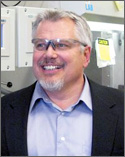
Lawrence L. Kazmerski—the Program Integrator for the Center for Inverse Design, has had more than 30 years experience in line and program management at NREL. In his position as Director of NREL's National Center for Photovoltaics, he has had line management and technical leadership responsibilities for a staff of 185 since 1999 (annual budget of ~$75 million). In 2009, he was appointed as Executive Director for Science and Technology Partnerships, with responsibilities for building partnerships with other laboratories in renewable energy worldwide. He has also had executive experience with several professional organizations, including that as elected President of the American Vacuum Society (AVS) in 1991. He is a member of the National Academy of Engineering, and a Fellow of the American Physical Society (APS), Institute of Electrical and Electronic Engineers (IEEE), and AVS. Full bio.

David S. Ginley—is a Research Fellow and manager of the Process Technology and Advanced Concepts group at NREL in the National Center for Photovoltaics. He has more than 30 years experience in developing new solar energy materials specifically with respect to oxides, photoelectrochemistry, and novel solar absorber materials and processing. His group currently consists of about 30 staff, postdoctoral researchers, and graduate students in the areas of organic photovoltaics, transparent conducting oxides, combinatorial high-throughput materials science, solution-based precursors to electronic materials, and novel process technologies for photovoltaic and related devices, including batteries and fuel cells. Full bio.
Peter A. Graf—is a Staff Scientist at NREL and has more than 15 years experience as a professional programmer and in developing and applying mathematical algorithms. His work at NREL focuses on simulation optimization and data analysis. He has been among the original designers of a data management, analysis, and mining system for high-throughput materials science, which is currently under growing use and increasing development at NREL. Full bio.
Stephan Lany—is a Senior Scientist at NREL with 10 years experience in computational materials science. He has developed and applied methods to predict materials properties based on first-principles calculations, including improved accuracies of formation energies, bandgap correction methods, and the prediction of the materials stoichiometry, defect concentrations, and Fermi level. Full bio.
John D. Perkins—has more than 15 years experience in developing mixed metal oxide thin-film materials, including more than 10 years with transparent conducting oxide materials. He also has 8 years experience in developing and applying high-throughput synthesis and characterization approaches to optical-quality thin-film materials. Full bio.
Colorado School of Mines
Vladan Stevanović—is a research professor at Colorado School of Mines and a theoretical solid-state physicist by training. However, he prefers to call himself a computational materials scientist because he uses large computers to deal with real-life problems and materials—in particular, those that have to do with more efficient use of the energy coming from the Sun. After coming to NREL in 2009 as a postdoc, he became fascinated by the Inverse Design idea and remains a part of the Center for Inverse Design working on applying, developing, and extending the Inverse Design methodology. Full bio.
Xiuwen Zhang—is a Research Assistant Professor in the Department of Physics, Colorado School of Mines. Previously, from 2008 to 2011, he was a postdoctoral researcher in the Solid State Theory Team at the National Renewable Energy Laboratory. He received his B.E. in Electrical Engineering from Tsinghua University, China, and his Ph.D. in physics from the Institute of Semiconductors in Chinese Academy of Science, Beijing, China. His research subject was the electrical and magnetic properties of semiconductor quantum dots and wires. Dr. Zhang’s current research focuses on searching for the lowest-energy crystal structure and studying the physical properties of new inorganic bulk materials, using the first-principles method.
Oregon State University
John F. Wager—is a Professor of the Department of Electrical and Computer Engineering at OSU. He has almost 30 years experience in the areas of compound semiconductor materials and devices, solar cells, transparent electronics, thin-film electroluminescence, thin-film transistors, surface and interface analysis, and semiconductor defects. His current research includes transparent electronics, printed electronics, and photovoltaics. Full bio.
Douglas A. Keszler—is Distinguished Professor of Chemistry at OSU. He joined the Department of Chemistry in 1985, where he has maintained research and education programs directed to the synthesis and study of new nonlinear optical materials, phosphors, wide-gap semiconductors, dielectrics, transparent electronics, and printed electronics. Full bio.
Northwestern University
Kenneth R. Poeppelmeier—has been Professor at the Department of Chemistry at NU since 1988. His research emphasizes the connections between the synthesis and structure of new materials, the physical properties of new materials, and the technological advances that can result from these discoveries. Full bio.
Arthur J. Freeman—is a world-renowned pioneering proponent and developer of computational quantum materials science and engineering. The most apt designation for this emergent field is that it enables the "virtual fabrication" of new materials. His Electronic Structure/Condensed Matter Theory Group has been a leading research group in electronic structure theory for more than 40 years at NU and earlier at the Massachusetts Institute of Technology. Full bio.
Thomas O. Mason—has been Professor at the Department of Materials Science and Engineering at NU since 1989, where his group investigates fundamental structure property relationships in technologically important electro-ceramics, including transparent conducting oxides, transparent oxide semiconductors, ionic ceramics, and mixed ionic/electronic ceramics. Full bio.
Giancarlo Trimarchi—is a Research Associate in the Department of Physics at Northwestern University. He is a physicist with extensive research experience in materials modeling via ab initio electronic structure methods at Northwestern University, the National Renewable Energy Laboratory, and the International Center for Theoretical Physics. His research activity is driven by a strong interest in combining atomistic electronic structure methods with global optimization procedures to devise computational schemes to design materials with target properties.
Stanford University / Stanford Synchrotron Radiation Lightsource / Stanford Linear Accelerator Center
Michael F. Toney—has more than 20 years experience in synchrotron X-ray methods of materials characterization. He is an expert in thin-film, surface, and interface studies with X-ray and neutron scattering techniques. He was one of the pioneers, while at IBM, in the use of surface diffraction for investigating atomic structure at solid/liquid interfaces and organic thin films. Full bio.
University of Colorado at Boulder
Liping Yu—is a Research Professor and member of the Material Science and Engineering program at the University of Colorado at Boulder. He joined the Center for Inverse Design as a postdoctoral researcher at NREL when the center was established in 2009. His work focuses on computation materials design, which involves the 1) fundamental understanding and prediction of material properties from high-throughput first-principles calculations, 2) identification of structure-property relations from data mining, and 3) finding of new and/or improved materials for energy and other applications. The materials of his interest include Earth-abundant photovoltaic absorbers, functional metal-oxide interfaces, and photo-electrochemical water-splitting materials.
Lijun Zhang—is a Research Associate at the University of Colorado at Boulder. Before this appointment, he worked as a postdoctoral researcher in Oak Ridge National Laboratory and the National Renewable Energy Laboratory. His research focuses on studying materials properties on the electronic and atomistic scale using quantum-mechanical electronic structure calculations. As a young researcher with nearly five years of experience since completing his Ph.D., he has published more than 40 peer-reviewed papers with 800-plus citations; his current h-index value is 15.
Alex Zunger—is currently Professor, Office of the Vice Chancellor, at the University of Colorado at Boulder. Previously, he led the Solid State Theory group at NREL for 30 years. This group has been a platform for state-of-the-art theory and modeling of semiconductors, insulators, metals, alloys, and nanostructures, including inverse band structure methods. He is co-developer of the plane-wave total energy method, the first "first-principles" pseudopotentials, and local density approximation (LDA) "exchange correlation" functionals. His scientific research involves all areas covered in this Center's activities, including photovoltaic materials, computational techniques, and nanostructures. Full bio.